Skinny Fat: What It Is and How to Fix It (A Trainer's Guide for Women)
What is skinny fat?
From the outside you look slim and your weight is within the normal range, but your body doesn't feel firm or toned. It's not about extra pounds — it's about having too little muscle. The number on the scale can be "right" while your body still isn't the way you want it to be.
Skinny fat happens to women of any build. It's not a label or a verdict: it's a state you can get out of through nutrition and strength training.
What a skinny fat body looks like
A skinny fat figure is usually slim but lacks firmness: the body looks soft and there's no muscle definition. The reason is a lack of muscle, not an excess of fat.
The softness doesn't come from having a lot of fat — it comes from having almost no muscle. If you take a very slim, soft figure like this and build up the glutes and strengthen the back and shoulders, it becomes firm and shapely thanks to muscle.
Skinny fat becomes especially visible after losing weight without enough protein or strength training. In a calorie deficit, your body first takes protein from the muscles you use least in everyday life. Those are your chest and back muscles: in daily life we hardly ever push or pull anything.
That's why the body loses weight unevenly. The chest and upper back look "sunken", the shoulder blades and spine stick out, while the thighs and calves can stay full.

Why your body becomes skinny fat: two paths, three causes
Skinny fat has three causes, in order of importance: not enough protein, no strength training and a calorie deficit. There are two different paths that lead there.
Cause 1. Not enough protein
Not eating enough protein is the main cause of skinny fat. When your diet lacks protein, your body starts using up its own muscle — after all, muscle is protein.
You can be short on protein on either path: eating freely or dieting. Good protein sources are meat, eggs, cottage cheese, dairy, legumes and, for vegetarians, soy.
Cause 2. No strength training
Strength training for all muscle groups tells your body that your muscles are working and need to be kept. Muscle is an energy-hungry tissue: whatever sits idle, the body gives up easily.
It's harder for women, and this is how I explain it. A man's body on a diet tries hard to hold on to muscle: genetic memory is still there, and men have always been the providers. A woman's body, on the contrary, tries hard to store fat, because that supports reproductive health and protects a future baby. In women, this fat most often sits on the belly, the lower belly and the thighs, and it's many times harder to get rid of.
Cause 3. A calorie deficit
A calorie deficit comes last because it can be balanced, with enough protein, fat and carbs. If you get enough protein in a deficit and do strength training, your body looks toned rather than skinny fat.
How to fix skinny fat
The fix is built on the same causes: enough protein and strength training for all muscle groups with gradually increasing load. Your calories depend on your starting figure.
I go by an average guideline of about 1.5 g of protein per kg of body weight (roughly 0.7 g per pound). For example, at 50 kg (110 lb) that's about 75 g of protein a day; 75–80 g is a perfectly workable range.
The workouts for different types of skinny fat are almost the same. The difference is in nutrition:
A common goal is to "lose weight until I'm toned". But a toned body always means muscle: more muscle mass with a lower body fat percentage. So you build muscle first and then, if you want, switch to a balanced deficit to keep the muscle and lose the remaining fat.
You can fix skinny fat at home or at the gym — what matters is strength training.
Skinny fat workout: exercises, sets and progression
A workout for getting out of skinny fat is classic compound strength training for the whole body, focused on the large muscle groups: 3 sets of 12–15 reps with a gradually increasing working weight.
Which exercises. One exercise each for your back, chest, legs and glutes (with an emphasis on glutes) and shoulders. You don't need separate biceps and triceps exercises at the start: they already work in the dumbbell shoulder press and in your chest and back exercises.
Why the workout is short. While you have little muscle, you also store little glycogen — the energy your muscles run on. A long workout will tire you out quickly, and it's easy to give up. But when your workout is just four exercises, it's very easy to say yes to it.
Format. For the first two to four months, full-body workouts work well: all the major muscle groups in one session.
Sets and weight. 3 sets of 12–15 reps. Choose a weight at which the 12th rep is a real struggle or close to failure.
Progression, using one exercise as an example:
To grow, a muscle needs a constant stimulus — a working weight that keeps going up. If you only add reps, you'll drift into high-rep work, which isn't aimed at muscle growth. A low-to-moderate rep range is best for growth; high reps make sense once you've already built muscle.
My own skinny fat story
I went through skinny fat myself. For several months I ate a vegetarian diet and didn't get enough protein: few legumes, little soy, tofu or nuts, mostly vegetables and soups. I want to be clear: the type of diet wasn't to blame — the unbalanced way I filled my plate was. As a result, I lost muscle: my chest looked "sunken", my back became bony, and my legs stayed normal, just without muscle.
Then I started training: I got dumbbells and my first protein powder. But for six months there was no progress, and for the same reasons. I still wasn't eating enough protein: about 50 g a day, when at my 50 kg (110 lb) I needed 75–80 g. And there was no progression — for those six months I trained with 2 kg (about 4 lb) dumbbells.
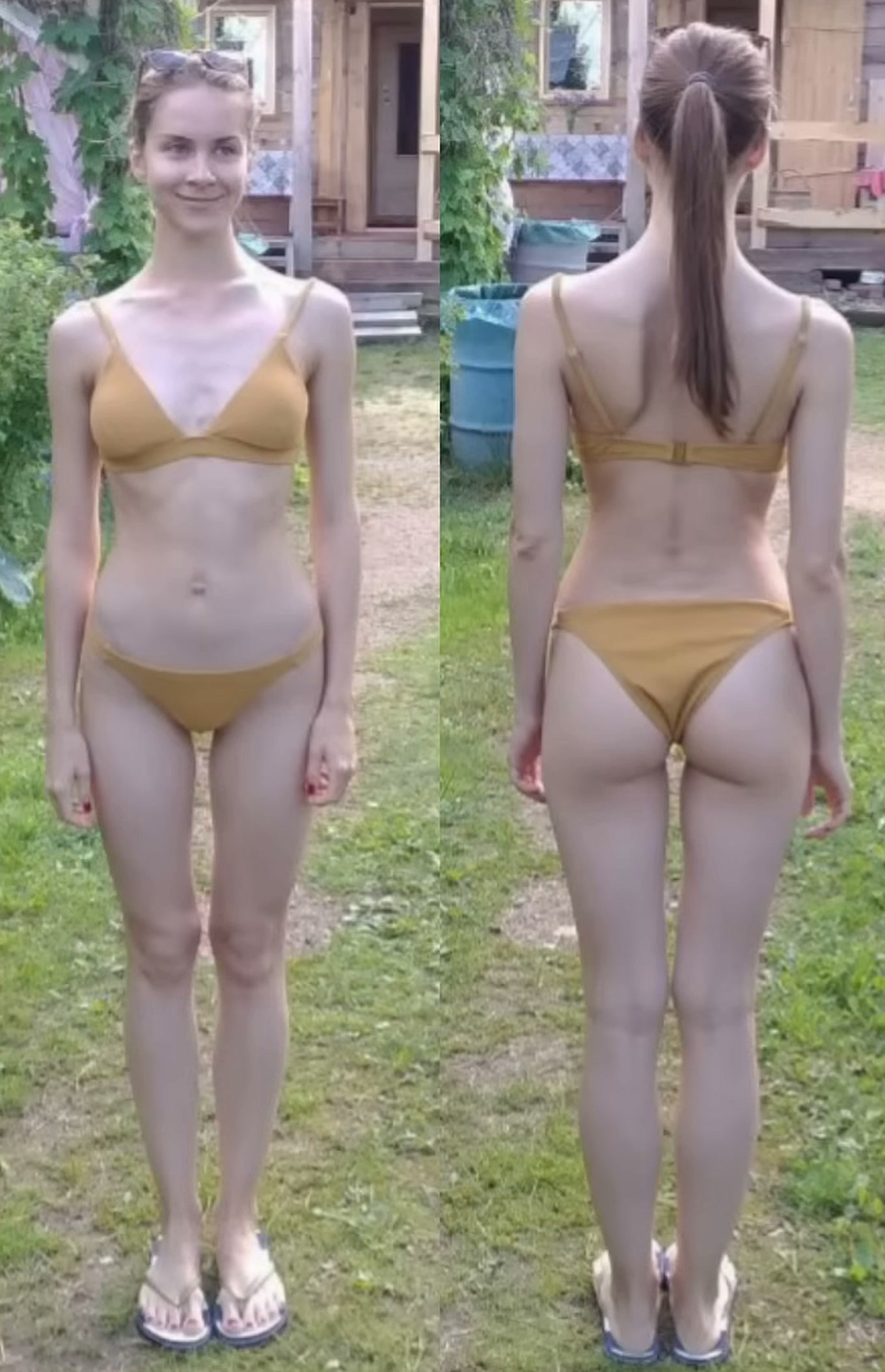
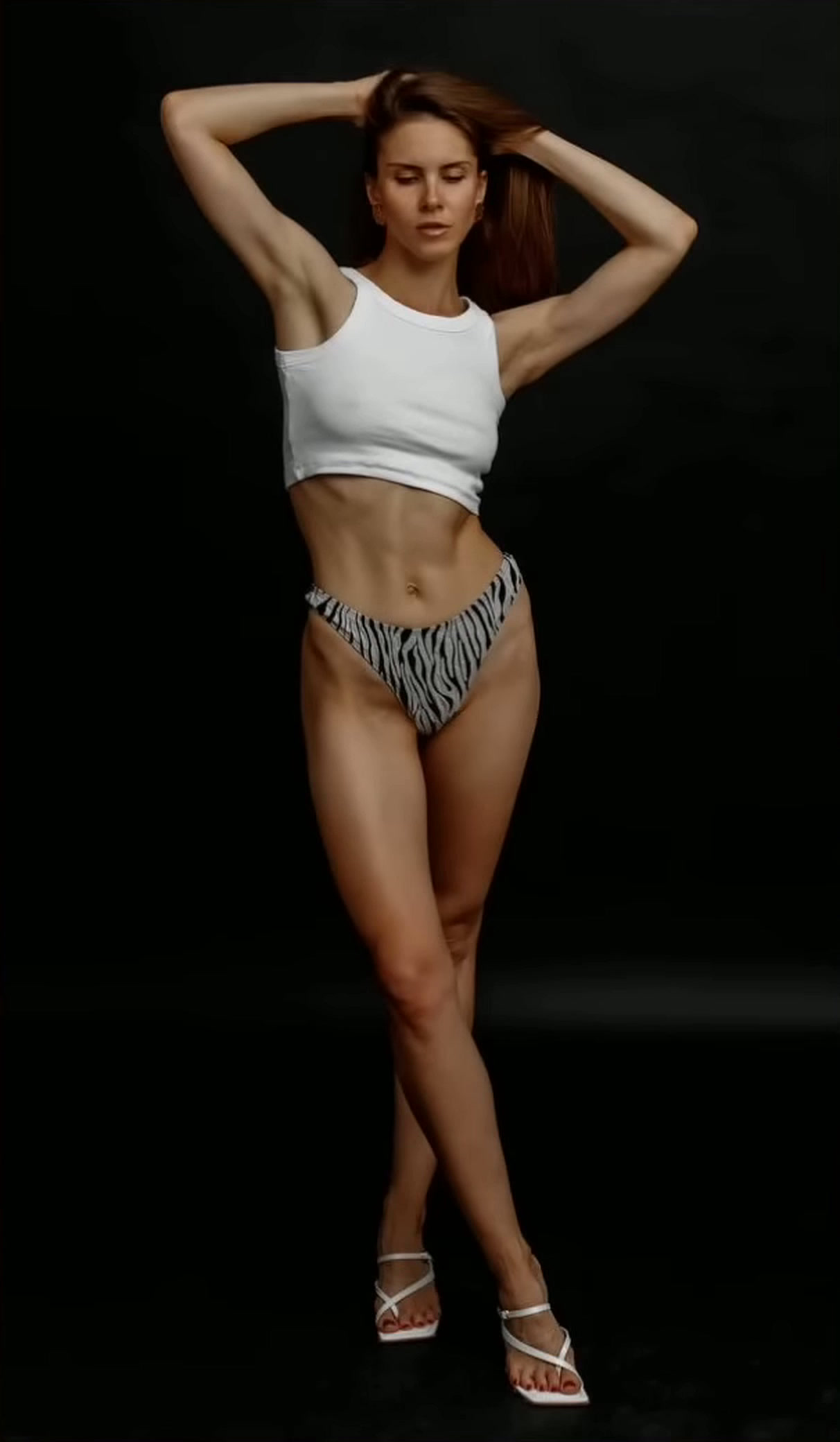
Everything changed when I ordered adjustable dumbbells and worked up to 10, 15, 20 and 25 kg (about 22–55 lb). It took me about 11 months to build my muscles. So for building muscle, I'd plan on about a year.
At the start, my workout had one exercise each for my back, chest, legs and glutes, and shoulders. I didn't train biceps or triceps yet.
Common mistakes and myths
- "I'm thin but everything is soft, so I need to lose weight." In slim women, softness comes from a lack of muscle. Losing more weight will only make it worse: you need to build muscle.
- "I want to lose weight until I'm toned." Toned means muscle at a low body fat percentage. You build muscle first, then lower your body fat if you want to.
- "I'll stick with 2–3 kg dumbbells and just add reps." That works once you've already built muscle. While you have almost none, you need a working weight that keeps going up.
- "Heavy weights will make me bulky." Many women are afraid of progression, but increasing the weight doesn't lead to any dramatic muscle growth — I tested this on myself. You build muscle to a size you're happy with and then switch to higher-rep work.
- "I'll deliberately lose weight without protein or training to start from scratch." Women with a naturally sturdy build sometimes want to do this. The trap is that the chest and back muscles go first, and the figure ends up nothing like what you expected.
FAQ
What does skinny fat mean?
Skinny fat means a normal weight and BMI with a low share of muscle and a high share of fat. You look slim, but your body isn't firm or toned.
Is skinny fat a body type?
No, it's not a body type but a state of your body composition. Skinny fat happens to women of any build, and you can get out of it with nutrition and strength training.
What does skinny fat look like in women?
In women, skinny fat often shows up as a slim upper body with fuller hips and belly. I explain this by the fact that a woman's body tries to store fat for reproductive health, and in a deficit without protein and strength training, the chest and back muscles go first.
How do I fix skinny fat if I'm already thin?
You don't need to lose more weight: in this case, the softness comes from a lack of muscle. I recommend strength training and maintenance calories or a small surplus — 200–300 calories above your daily expenditure, planned in protein, fat and carbs.
What exercises should I do if I'm skinny fat?
Compound strength exercises for the large muscle groups: back, chest, legs and glutes, and shoulders — one exercise for each. For the first two to four months, a full-body format works well.
Can you fix skinny fat at home?
Yes, you can fix skinny fat at home or at the gym — what matters is strength training for all muscle groups with gradually increasing load. To keep progressing, I switched from 2 kg dumbbells to adjustable ones.
